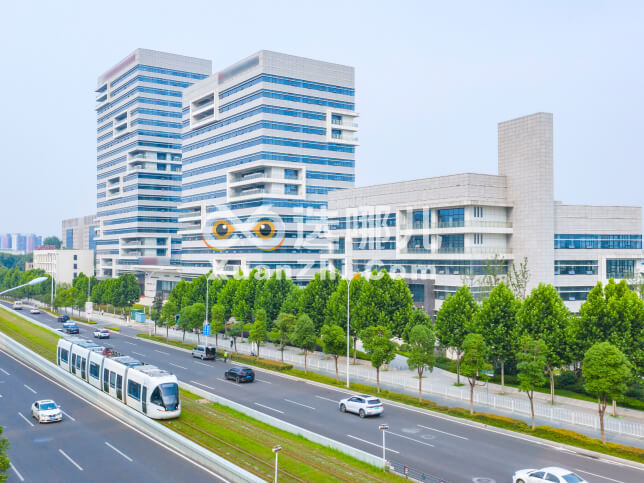
Government Overview
Pingluo County is located in the northern part of the Ningxia Plain. With a total area of 2,060 square kilometers, it administers 13 townships and 144 administrative villages. The county is home to 18 ethnic groups, including Han, Hui, Manchu, and Mongol, with a total population of 316,000 (270,300 permanent residents as of the end of 2024), of which ethnic minorities account for 39.4%.The county has been honored with numerous titles, including National Model County for Ethnic Unity and Progress, National Model County for All-for-One Tourism, National Model County for E-commerce in Rural Areas, National Garden County, National Model County for Leisure Agriculture and Rural Tourism, National Model County for Conservation and Intensive Use of Land Resources, National County with Basic Balance in Compulsory Education Development, Autonomous Region Model County for Supporting the Military and Caring for Veterans, Autonomous Region Advanced County for Food Safety, Autonomous Region Civilized County, and Autonomous Region Hygienic County. It has also been repeatedly selected as one of the Top 100 Counties with the Greatest Investment Potential among small and medium-sized cities nationwide.
I. Historical Development
Pingluo County is one of the oldest counties in Ningxia. Historically, it served as the gateway to northern Ningxia and was an ancient military stronghold. During the Qin Dynasty, it belonged to Fuping County of Beidi Commandery; during the Western Han Dynasty, Lian County was established; and during the Sui and Tang Dynasties, Huaiyuan County and Dingyuan County were successively established.During the Song Dynasty, Dingzhou and Dingyuan County were established; in the Ming Dynasty, the Qianwei Pinglu Garrison Command was established; and in the second year of the Yongzheng reign of the Qing Dynasty (1724), it was renamed Pingluo County, a name it has retained for 298 years. After the founding of the People’s Republic of China, it remained part of Ningxia Province; in 1954, it was under the Yinchuan Special Administrative Region of Gansu Province; and since 1958, it has been part of the Ningxia Hui Autonomous Region.In January 2004, Hongyazi Township, Gaoren Township, and Mataigou Town from the former Taole County were transferred to Pingluo County.
II. Natural Resources
Pingluo County has a temperate arid climate characterized by abundant sunshine, ample heat, significant diurnal temperature variations, and a short frost-free period, exhibiting distinct continental climate features.The county is rich in mineral resources, with proven coal reserves of 1.64 billion tons. Among these, “Taixi Coal” is world-renowned for its high carbon content, high calorific value, low sulfur content, and low ash content, with geological reserves of 640 million tons. Proven quartzite reserves stand at 17.546 million tons, with estimated prospective reserves of 4.28 billion tons.The county is home to cultural and historical sites such as the Helan Mountain Rock Paintings, Pingluo Jade Emperor Pavilion, Bell and Drum Towers, Tianzhou Pagoda, and the Ming Great Wall. Lakes and wetlands—including the Yellow River’s Tianhe Bay, Hanquan Lake, Kangxi Lake, and Zhenshuo Lake—are scattered throughout the region. Sha Lake, one of China’s first 5A-rated scenic areas that blends the charm of southern water towns with desert culture, is a renowned leisure and resort destination.
III. Industrial Development
Industry: The county currently has 586 industrial enterprises, including 176 above-scale enterprises and 410 below-scale enterprises. Leveraging its advantages in energy resources such as coal and electricity, the county has formed a diversified industrial cluster with multiple growth pillars, centered on three major industries: new materials, green cyanamide, and advanced equipment manufacturing.The county accounts for 70% of the nation’s production capacity for coal-based activated carbon and cyanamide, and ranks second nationally in silicomanganese alloy production. The Ningxia Green Cyanamide Chemical New Materials Research Institute was officially established, and the Second China Cyanamide Summit Forum was successfully held, aiming to build a global “Cyanamide Capital.” Additionally, the world’s first facility for producing fuel ethanol from industrial exhaust gases in the ferroalloy industry has officially commenced operations.
Agriculture: The region currently has 1.23 million mu of arable land and has achieved 20 consecutive years of grain production growth, with a total output of 390,000 metric tons in 2023.We are vigorously developing three major industries: modern livestock farming, high-quality melons and vegetables, and specialty seed production. Currently, there are 21 standardized dairy farms and 113 large-scale beef cattle and sheep farms, with livestock populations of 100,000 dairy cows, 145,000 beef cattle, and 990,000 sheep, respectively. We are building a nationally influential “Home of Premium Dairy” and a production base for high-end beef and sheep meat.The area under high-quality melons and vegetables reaches 140,000 mu, with specialty agricultural products such as “Ningxia Chinese Broccoli,” “Summer-Resistant Tomatoes,” and “Desert Melons and Vegetables” selling well in cities like Beijing, Shanghai, and Guangzhou. The area dedicated to specialty seed production reaches 81,000 mu, achieving integrated development in breeding, propagation, and promotion. The Ningxia Seed Industry Expo has been held for ten consecutive sessions, and “Pingluo Seeds” are renowned nationwide, having been designated as one of the first National Regional Vegetable Seed Breeding Bases.“Huangquqiao Lamb” and “Pingluo Desert Watermelon” have been awarded national geographical indication (GI) certifications.
In the service sector: modern service industries such as cultural tourism, modern logistics, and e-commerce are thriving. Three major commercial districts—Yangguang, Gulou, and Huirong Xintiandi—have been established. The Yingbei Hospital’s new model of integrated medical care and elderly care is operating successfully, and the tertiary sector’s contribution to economic growth has reached 37%.Leveraging Shahu Lake, the county has developed the Dashahu Leisure and Resort Core Area and established tourism-oriented towns and villages such as the Huangquqiao Specialty Cuisine Town and the Yaofu Commerce and Tourism Town. Huangquqiao Village and Liqingdi Village have been recognized as National Key Rural Tourism Villages, and “Colorful Pingluo” has been listed among China’s Most Beautiful Counties. Modern logistics is developing strongly, with three logistics enterprises achieving 3A-level or higher certification,and new business models such as online freight and futures delivery have flourished. E-commerce has prioritized integration with traditional commerce, modern agriculture, and all-for-one tourism, resulting in the construction of four township-level express delivery distribution centers and the optimization and consolidation of 60 rural delivery outlets. Express delivery services now cover 100% of rural areas, with the county’s total e-commerce transaction volume reaching 2.4 billion yuan, marking a 30% increase.