Park Overview
I. Overview
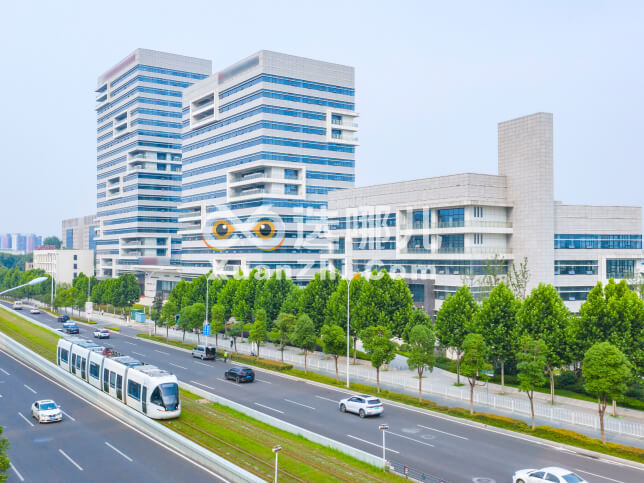
The Sichuan Zhongjiang High-Tech Industrial Park was established in March 2005, upgraded to a provincial-level development zone in June 2012, and further upgraded to a provincial-level high-tech industrial park in July 2015.Located in Nanhua Town in the northwestern part of the county, the park lies along the Chengdu-Deyang-Mianyang-Guangyuan northbound economic corridor and the Chengdu-Nanchong-Guangyuan-Chongqing southbound economic corridor. It serves as a key node for the Chengdu Economic Zone Ring Expressway, the Chengdu-Deyang-Nanchong-Hanzhong Expressway, and the Chengdu-Suining-Chongqing Expressway. It is 64 kilometers from Chengdu,38 kilometers from Deyang, 65 kilometers from Mianyang, and 22 kilometers from Asia’s largest logistics hub. With its distinct geographical advantages, the park is a priority beneficiary of the economic influence radiating from major cities such as Chengdu, Deyang, and Mianyang, and is also one of the preferred destinations for industrial relocation from developed regions in eastern China and Chengdu.
II. Historical Development
On June 5, 2012, it was upgraded to the Sichuan Zhongjiang Economic Development Zone with the approval of the People’s Government of Sichuan Province (Sichuan Provincial Government Letter [2012] No. 113). On July 7, 2015, it was further upgraded to a provincial-level high-tech zone with the approval of the People’s Government of Sichuan Province (Sichuan Provincial Government Letter [2015] No. 153).Bordered by the Kai River to the east, the city’s outer ring road to the west, Maozui in Nandu Village to the south, and connected to the Jiexing Bridge to the north, the zone has a planned area of 14.3 square kilometers. By 2016, the developed area of the zone had reached 11 square kilometers;It is home to 81 industrial enterprises above designated size, including 11 high-tech enterprises (accounting for 13.5%) and 36 technology-based enterprises (accounting for 44.4%). Key priority industries—such as biomedicine, electronic information, and new materials—achieved a total industrial output value of 16 billion yuan, with the concentration of leading industries reaching 68%;Total industrial output value reached 23.6 billion yuan, an increase of 10.3%, with high-tech industries contributing 10.5 billion yuan, accounting for 44.5%; industrial value-added reached 6.3 billion yuan, up 10.5%; the park generated total revenue of 24.5 billion yuan; tax revenue amounted to 200 million yuan; and export value reached 84.81 million USD.
III. Leading Industries
The park’s key industries—including biopharmaceuticals, electronic information, and new materials—achieved a total industrial output value of 16 billion yuan, with the concentration of leading industries reaching 68%.First, the park has established a processing industrial chain for authentic traditional Chinese medicinal materials led by enterprises such as Fengchun Pharmaceutical and Tongxing Pharmaceutical, as well as a deep-processing industrial chain for wheat led by enterprises such as Xiongjian Industrial and Wanfeng Grain and Oil. It possesses an annual processing capacity of 45,000 metric tons of traditional Chinese medicinal materials, an annual production capacity of 30,000 metric tons of various proprietary Chinese medicines, and300,000 metric tons of flour and 220,000 metric tons of noodles annually. The market share of flour and noodles within Sichuan Province has reached 7%, and the park has cultivated a number of well-known brands both within and outside the province, including Fengchun, Xiongjian, Yanshi, Tongxing, and Chunxiang.Second, the electronic information industry is developing rapidly, making the region the Southwest’s primary production base for electronic components, R&D and production base for magnetic materials, and specialized machining production base. Home to leading electronic component manufacturers such as Hongfa Acoustics, Yongde Electronics,Kunda Electronics, and Ruiteng Electronics. The electronic components sector has formed a cluster-based and supply-chain-driven development model, with an annual production capacity of 1.5 billion electronic components and 500 million relays. The city holds over 30% of the international market share for computer connectors and over 10% of the domestic market share for relays.Third, in the field of new materials, the city has attracted leading enterprises such as Taijiang Copper and Boyi Magnetic Materials. It possesses an annual production capacity of 20,000 metric tons of copper alloy materials and 900 metric tons of magnetic materials. The technology for products such as copper alloy materials has reached advanced domestic levels, while the quality and technical standards of magnetic materials are internationally advanced.
IV. Development Plan
In accordance with the “3+3+1” industrial positioning, the city will prioritize the development of leading industries such as biomedicine, electronic information, and new materials; optimize the development of three traditional industries—food, machinery, and light industry and textiles; and accelerate the cultivation and development of production-oriented services.By 2020, the number of industrial enterprises above designated size will exceed 100, total industrial output value will surpass 35 billion yuan, the average investment intensity in the built-up area will reach 1.9 million yuan, and the average output intensity will reach 3.1 million yuan.