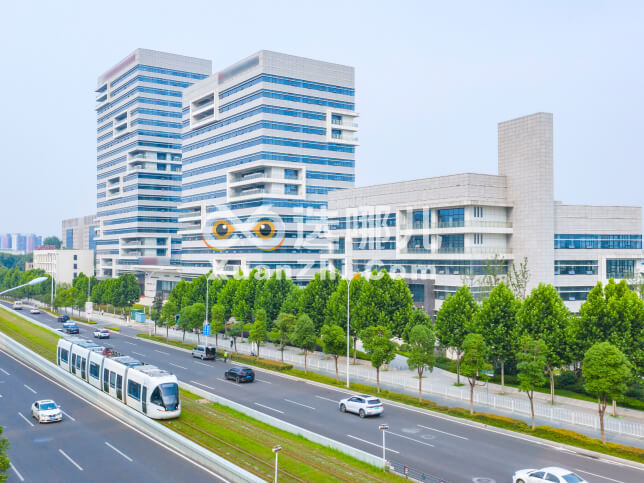
Park Overview
The Jiangsu Binhai Economic Development Zone was established in August 2001 and was approved as a provincial-level development zone in April 2006. It has a total planned area of 27.6 square kilometers.Currently, the park is home to more than 130 enterprises, forming two major pillar industries: fluid equipment and textiles and apparel. In recent years, the park has focused on the goal of “building a modern industrial new city that is strong, vibrant, distinctive, and beautiful—a place suitable for industry, living, and entrepreneurship.” It has implemented five major strategies: “optimizing distinctive industries, upgrading pillar industries, developing emerging industries, adhering to science and technology-driven development, and promoting comprehensive development.” The park has now taken shape and its industrial characteristics are becoming apparent.In 2010, the Pump and Valve Industrial Park was approved as the “Jiangsu Binhai Fluid Equipment Industrial Park,” and in 2011, it was designated as a “Jiangsu Provincial Demonstration Zone for Small and Medium-sized Enterprise Industrial Agglomeration” by the Provincial Department of Economy and Information Technology.
The Jiangsu Binhai Economic Development Zone Industrial Park comprises the North, Central, and South Zones. Construction of the North Zone began in October 2006, with a total planned area of 10 square kilometers. Leveraging the transportation advantages of the Coastal Expressway exit and Provincial Highway 327, it focuses on developing fluid equipment, high-tech industries, and modern services; the Central Zone covers an area of 7 square kilometers and focuses on the pharmaceutical and electronics industries;The Southern Zone covers 11 square kilometers and focuses on the development of textiles and apparel, as well as new energy and new materials industries. The park features well-developed service infrastructure and a comprehensive sharing mechanism, having established a support system for entrepreneurship and innovation that includes a public service platform for generic technologies, a market trading platform, a modern logistics platform, a diversified investment and financing mechanism, and entrepreneurship coaching and training.
The Jiangsu Binhai Economic Development Zone is located in the eastern part of Northern Jiangsu, bordering the Yellow Sea to the east and facing South Korea and Japan across the sea.The park falls within the three-hour economic zone of Shanghai and Qingdao, looking south toward Shanghai, China’s largest city, and north toward Lianyungang, the eastern gateway of the Eurasian Land Bridge. The land provided by the park is largely ready for development with “six utilities and one leveling” in place. Comprehensive tax incentives are offered, and the park is committed to creating a “zero-fee zone.” To attract more investors to establish businesses here, the development zone has also innovatively proposed a “case-by-case” strategy based on the scale, intensity, and progress of investments.The Jiangsu Binhai Economic Development Zone boasts unique transportation advantages. By land, the Coastal Expressway and National Highway 204 run north-south, while Provincial Highway 327 runs east-west. Shanghai is reachable within three hours, Lianyungang in just 40 minutes, and Yancheng—a renowned city in Jiangsu known as the “City of Cranes and Deer”—is 80 kilometers away.By rail, Yilin Station on the Xinchang Railway is 40 kilometers from the Jiangsu Binhai Economic Development Zone. The Coastal Railway, currently under construction and connecting Dalian in the north to Zhanjiang in the south, will have its Binhai Station located to the west of the Development Zone’s northern district. By water, the Huai River’s estuary and the Tongyu Canal allow water to flow directly to the sea via two channels, and the state is planning to designate these as major navigable waterways.The Binhai Port, currently under construction, is the most cost-effective and geographically advantageous section along the more than 1,000-kilometer coastline stretching from Lanshan Tou in Shandong to Hangzhou Bay in Zhejiang for the development of 100,000- to 200,000-ton-class berths. The China National Energy Investment Group plans to invest 100 billion yuan in Binhai Port over the next 5 to 10 years to transform it into a major energy port.
Currently, the 50-million-ton coal reserve center project (with an investment of 10 billion yuan), the 500,000-kilowatt offshore wind power project (8 billion yuan), and the IGCC (Integrated Gasification Combined Cycle) project (13 billion yuan) have all been fully launched. Additionally, CNOOC Group’s 12-billion-yuan LNG (Liquefied Natural Gas) project has been established in the port area. By 2013, the port’s navigation channels will be capable of accommodating vessels of 100,000 tons or more.The advent of the "major port" era will bring immense opportunities and vast development potential to the development zone. By air, it is only a 50-minute drive to Yancheng Airport and Lianyungang Airport, and just a 30-minute drive to Lianshui International Airport, the largest in northern Jiangsu.The crisscrossing network of land, sea, air, and river transportation has established a comprehensive, multi-dimensional transportation network for the park. Advantages in Land Resources and Tax Policies The Jiangsu Binhai Economic Development Zone has ample land reserves, and its industrial land prices are the lowest in Jiangsu Province. For new production-oriented industrial projects that comply with national industrial policies and meet the investment intensity standards for provincial-level development zones, the listed land price is set at the appraised minimum price; for projects with substantial investment, preferential land allocation is available.For all new industrial enterprises established in the park, the local portion of corporate income tax is fully rebated for the first three years and rebated at 50% for the following five years. Starting from the year in which the enterprise’s average tax revenue per mu reaches 20,000 yuan, the local portion of value-added tax is rebated at 50% for eight years. Production Cost Advantages: Investing in the Binhai Economic Development Zone is highly cost-effective. Water rates are 2.32 yuan per ton for domestic use and 2.67 yuan per ton for industrial use;Electricity: The park features two substations capable of meeting power demands at various voltages, including 10 kV, 35 kV, 110 kV, and 220 kV. Electricity rates are standardized across the province. The development zone operates on a dual-circuit power supply system, ensuring uninterrupted service except during line maintenance; once the power plant currently under construction within the park becomes operational, it will provide ample steam at preferential rates.Main industrial and residential gas pipelines have been extended to the park’s main thoroughfares.