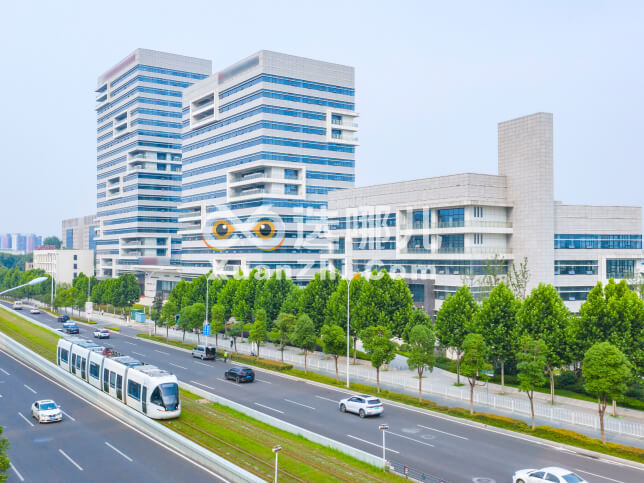
Development Zone Introduction
Wangui, historically known as Shuanglong City, is located in central Heilongjiang Province, in the heart of the Songnen Plain.The county is encircled by the Hulan, Tongken, Keyin, and Nuomin Rivers, and is known as the “County of Chinese Poetry,” the “Hometown of Chinese Calligraphy,” and the birthplace of Lin Feng, former Vice Chairman of the Standing Committee of the National People’s Congress. The county covers an area of 2,314 square kilometers and comprises 10 towns, 5 townships, 109 villages, and 655 natural hamlets. As of the end of 2022, the total population was 436,825.
Wangui boasts fertile fields, thriving livestock, lush forests, and pristine waters, with its output of pollution-free agricultural products ranking among the highest in the province. It is a national commercial grain production base and a major grain-producing county in China; its livestock industry is well-developed, earning it the titles of “Hometown of Lean-Meat Pigs” and “Major Pig-Exporting County.” With its picturesque landscapes and farmland integrated into a forest network, it is recognized as a National Advanced County for Ecological Agriculture and a National Advanced County for the “Three-North” Shelterbelt Forest Program.
New industries are rapidly emerging, and the Wangqui Economic and Technological Development Zone was upgraded to a provincial-level economic development zone in May 2014. A local industrial system centered on food, pharmaceuticals, chemicals, textiles, and energy has taken initial shape, and the county has become a national pilot county for the circular economy.
The county boasts distinctive cultural characteristics and a profound cultural heritage. With a strong emphasis on literature and education, the air is filled with the scent of ink, and its poetry culture shines brilliantly. To date, it is the only county north of the Yellow River to have been honored with the title of “County of Chinese Poetry.” Shadow puppetry has been listed as a national intangible cultural heritage, and the county is recognized as a provincial-level “Hometown of Shadow Puppetry Culture.”The county places great emphasis on cultural heritage preservation and the development of cultural venues, earning it the title of “National Advanced County in Cultural Heritage Work.”
The living environment is pleasant and inviting. It boasts cultural and tourism resources such as the Miaoxiangshan Tourism Development Zone, the AAA-rated Lin Feng Former Residence Memorial Hall, the Botanical Garden, the AAA-rated Manchu Folk Culture Park, and the Xiwa Huang Provincial Wetland Nature Reserve.Through the construction of an ecological garden city guided by the principles of “people-centered, roads as the backbone, greenery as the lifeline, forests as the charm, and culture as the soul,” the small town of Wangui—now radiating a fresh and vibrant charm—has been designated a Provincial Garden City.
Transportation is convenient and well-connected. The Harbin-Yichun Expressway, Harbin-Heihe Highway, Yichun-Sui’an Highway, and Sui’an-An’er Highway encircle the area, while the Sui’bei Expressway and the soon-to-be-constructed Sui’an-An’er Railway traverse the region.Harbin, Daqing, and Taiping International Airports are all within a one-hour economic zone. Roads connecting towns and villages have formed a highway network with four rings and eight radial routes.
Urban and rural cultural and sports activities are rich and diverse, allowing people to fully enjoy the abundant fruits of reform and development. The county has been recognized as a provincial model county for civilized village and town construction and a national advanced county for public safety development.